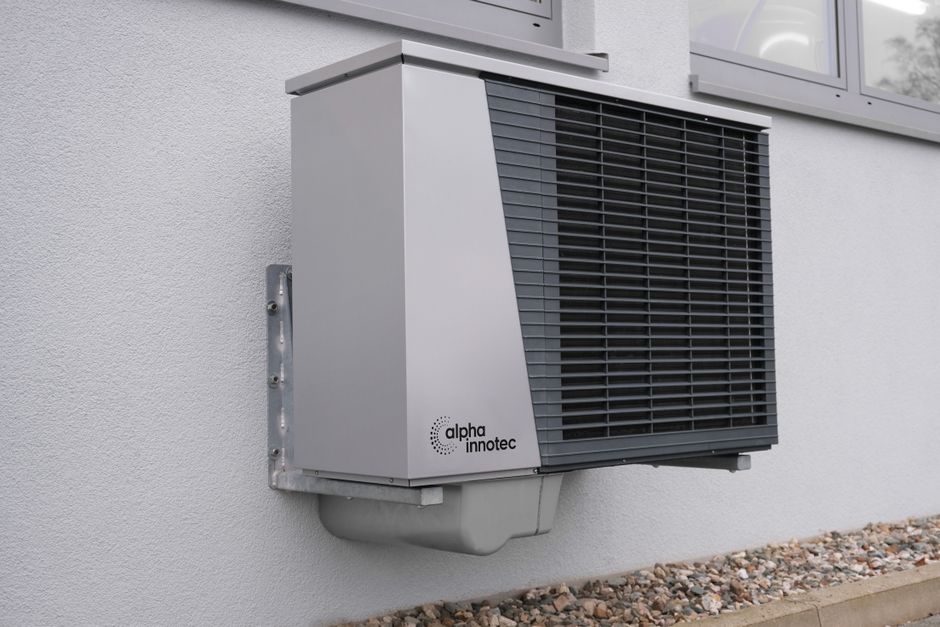

If you are searching for a “heat pump vs air conditioner” comparison to replace your old system, you have probably realized that the decision is not as simple as it looks. Both units sit outside your home, both push cool air through your vents in July, and both carry SEER2 ratings that sound like alphabet soup. The confusion is real, and HVAC contractors do not always make it easier. Some push heat pumps hard because the rebates are generous. Others steer you toward a traditional AC because they have installed them for thirty years and do not want to retrain their crews. This guide cuts through the noise. By the end, you will know exactly which system saves you more money in 2026, how to qualify for the latest rebates, and the specific scenarios where an air conditioner is still the smarter buy.
Table of Contents
-
How a Heat Pump and an Air Conditioner Actually Work (The Simple Version)
-
Heating Performance: Where the Heat Pump Wins (and Where It Struggles)
-
Cost Breakdown: Upfront Price, Monthly Bills, and Payback Period (2026 Data)
-
Quick Decision Guide: Should You Buy a Heat Pump or an Air Conditioner in 2026?
How a Heat Pump and an Air Conditioner Actually Work (The Simple Version)
Here is the truth that most manufacturer websites bury in technical jargon: in cooling mode, a heat pump and an air conditioner are the same machine. Both use a compressor to circulate refrigerant between an outdoor coil and an indoor coil. The refrigerant absorbs heat from inside your home, carries it outside, and dumps it into the air. The physics do not change. The parts are nearly identical. If you stood in front of two outdoor units while both were cooling your house, you could not tell which was which by sound, performance, or the temperature of the air coming out of your vents.
The only mechanical difference is a component called the reversing valve. A heat pump has one. An air conditioner does not. This valve is exactly what it sounds like: it reverses the direction of refrigerant flow. In summer, refrigerant moves one way and pulls heat out of your home. In winter, the valve flips, the refrigerant moves the opposite direction, and the system pulls heat from the outdoor air and pumps it inside. That is the entire secret. One extra part transforms a cooling-only appliance into a year-round heating and cooling solution.
An air conditioner cannot produce heat. Period. It requires a separate heating system, typically a gas furnace, an oil boiler, or electric resistance strips installed in the air handler. This is the single biggest structural difference between the two options, and it drives nearly every cost and performance consideration that follows.
As for cooling efficiency, the numbers prove the parity. American Standard’s most efficient air conditioner, the Platinum 20, achieves a SEER2 rating of up to 23.6. Their most efficient heat pump, also a Platinum 20, reaches a SEER2 of up to 22.4. That gap is negligible. In real-world electricity consumption, you will not notice the difference on your summer bill.
Cooling Performance: The 100% Match You Need to Know
Multiple manufacturers, including Trane, Airtron, and American Standard, confirm what the physics already tell us: there is no difference in cooling comfort between a heat pump and an air conditioner. Humidity removal is identical. Air quality is identical. The temperature consistency from room to room is identical. If you install a high-SEER heat pump and your neighbor installs a high-SEER AC with the same tonnage and ductwork, your homes will feel exactly the same in August.
The efficiency is a wash, too. A 20 SEER2 heat pump and a 20 SEER2 air conditioner will consume nearly the same kilowatt-hours during the cooling season. Any variation comes from installation quality, duct leakage, and home insulation, not from the choice between a reversing valve or no reversing valve.
This leads to a simple takeaway for anyone shopping in 2026: do not choose one system over the other based on cooling performance. The decision hinges entirely on heating, cost, and your long-term plans for the home.
Heating Performance: Where the Heat Pump Wins (and Where It Struggles)
The heat pump’s heating advantage is real and measurable. Instead of burning natural gas, propane, or heating oil to create warmth, a heat pump moves existing heat from the outdoor air into your home. This process is inherently more efficient than combustion. In moderate temperatures, a heat pump can deliver a Coefficient of Performance (COP) of 3 to 4, meaning it produces three to four units of heat for every unit of electricity it consumes. Even the best gas furnace tops out around 98% efficiency, which means some energy is always lost up the flue.
The cold-weather reality is more complicated. Standard heat pumps begin losing heating capacity when outdoor temperatures drop below roughly 30 degrees Fahrenheit. The refrigerant cannot absorb enough heat from frigid air, and the system compensates by running longer cycles or calling for backup. This is where the technology has evolved dramatically. Cold-climate heat pumps, which are a major market segment in 2026, use variable-speed compressors and enhanced vapor injection to maintain strong performance well below freezing. Most cold-climate models deliver 100% of their rated heating capacity down to 5 degrees Fahrenheit, then gradually ramp down to roughly 70% capacity at negative 10 degrees.
The dual-fuel or hybrid approach addresses the remaining gap. American Standard’s Senior Product Manager has publicly recommended pairing a heat pump with a gas furnace in colder regions. The heat pump handles heating during fall, spring, and mild winter days, covering roughly 90% of the year. The gas furnace takes over only during extreme cold snaps when the heat pump’s efficiency drops and electric backup strips would spike your bill. This setup gives you the efficiency of a heat pump without the anxiety of a cold-weather performance cliff.
What About the “Auxiliary Heat” Warning?
If you have ever talked to a heat pump owner who complained about high winter electric bills, auxiliary heat is almost certainly the culprit. When a heat pump cannot extract enough warmth from the outdoor air, electric resistance strips inside the air handler turn on to supplement the output. These strips work like a giant toaster and consume enormous amounts of electricity. A properly sized heat pump paired with a dual-fuel furnace avoids this problem entirely. If you are installing a heat pump in a cold climate and skipping the gas backup, insist on a cold-climate model and a Manual J load calculation to ensure the system is sized correctly for your home’s heat loss.
Cost Breakdown: Upfront Price, Monthly Bills, and Payback Period (2026 Data)
Installation costs vary by region, tonnage, and the complexity of your existing ductwork, but the price gap between the two systems has narrowed considerably in recent years. In 2026, a central air conditioner replacement typically runs between $4,500 and $7,000 for a standard-efficiency unit in an average-sized home. A comparable heat pump installation runs between $5,500 and $8,500, representing a premium of roughly 10 to 20 percent. High-efficiency and cold-climate models push both numbers higher, but the percentage gap remains consistent.
Monthly operating costs tell a more interesting story. During the summer, your cooling bill will be identical between the two systems assuming the same SEER2 rating. The divergence happens in winter. If you currently heat with electric resistance, a heat pump will slash your heating costs by 50 to 60 percent, saving $50 to $100 per month during the heating season. If you heat with natural gas, the comparison depends on local utility rates. In regions where electricity is cheap and gas is expensive, the heat pump wins. In areas with low gas prices, a high-efficiency furnace may cost slightly less to operate than a heat pump during the coldest months. The dual-fuel system effectively optimizes this by running the heat pump when it is cheaper and switching to gas when it is not.
The payback period calculation brings these numbers together. Assume a heat pump costs $1,500 more upfront than an equivalent AC plus furnace replacement. If the heat pump saves you $400 per year in combined heating costs, you break even in just under four years. After that, the savings accumulate. Factor in the rebates discussed below, and the payback period often drops to two years or less.
Lifespan is the counterweight. A central air conditioner typically lasts about 15 years. A heat pump, because it runs year-round, lasts 12 to 15 years. That three-year difference represents real value. If you plan to stay in your home for 20 years, you will likely replace a heat pump once and an AC once, so the replacement cost difference is a wash. If you plan to sell in 10 years, the shorter lifespan does not affect you directly but may come up during a home inspection.
Rebates and Incentives for 2026: The $8,000 Question
The financial case for heat pumps in 2026 is heavily influenced by government incentives. The Inflation Reduction Act provides a federal tax credit of up to $2,000 for qualifying heat pump installations, and this credit remains available through 2032. The credit applies to the heat pump itself, not the full installation cost, but $2,000 is a meaningful offset against the upfront premium.
State and utility rebates add another layer. American Standard notes that combined rebates can reach up to $8,000 for low-to-moderate-income households, depending on location. Programs vary dramatically by state. New York, California, and Massachusetts offer aggressive heat pump incentives as part of their electrification and climate goals. Texas and other states with lower electricity costs may offer more modest programs or none at all. The key point is that air conditioners rarely qualify for significant rebates. An AC is considered a baseline appliance, not an energy-efficiency upgrade, so the incentive landscape tilts heavily toward heat pumps.
Your action step is straightforward. Before you get quotes, visit the DSIRE database or your local utility’s website and search for 2026 heat pump rebates. Print the program details and bring them to your contractor. Some installers handle the rebate paperwork for you. Others leave it to the homeowner. Either way, knowing what is available prevents you from leaving thousands of dollars on the table.
Maintenance and Lifespan: The Hidden Cost of Year-Round Use
An air conditioner needs one tune-up per year, ideally in spring before the cooling season begins. The technician checks refrigerant levels, cleans the coils, inspects electrical connections, and confirms the system is ready for summer. It is a simple, relatively inexpensive service call.
A heat pump needs two tune-ups per year: one in spring for cooling season and one in fall for heating season. The compressor runs 365 days a year instead of four or five months, which means more cumulative wear on bearings, contactors, and capacitors. The reversing valve and defrost control board add complexity that an AC does not have. Statistically, heat pumps have a slightly higher probability of needing a repair in years 8 through 12 compared to an air conditioner of similar quality.
The trade-off is that you save on fuel costs every winter. Even if you spend an extra $150 per year on maintenance and set aside more for a mid-life repair, the heating savings typically outweigh those costs in moderate climates. In very cold climates where the heat pump runs hard all winter, the maintenance premium is higher and the savings are lower, which changes the calculus.
Environmental Impact and Noise: The Overlooked Factors
A heat pump eliminates on-site fossil fuel combustion. If your home currently burns natural gas or heating oil, switching to a heat pump reduces your direct carbon emissions to zero. The overall environmental benefit depends on your local electrical grid. If your utility generates power from coal, the net carbon reduction is smaller. If your grid includes significant renewable energy, as many U.S. grids do in 2026, the heat pump is a clear environmental win.
Refrigerant chemistry is also shifting. The HVAC industry is transitioning from R-410A, which has a high Global Warming Potential, to lower-impact refrigerants like R-32 and R-454B. New systems manufactured in 2026 are increasingly using these newer refrigerants, which have roughly one-third the climate impact of R-410A if leaked. When comparing quotes, ask your contractor which refrigerant each system uses. It is a small detail that matters over the 15-year life of the equipment.
Noise levels are comparable between modern heat pumps and air conditioners. Both typically operate between 50 and 60 decibels at the outdoor unit, which is roughly the sound of a refrigerator running or a quiet conversation. Heat pumps do run in winter when windows are closed, so outdoor noise is even less of a concern during the heating season. Placement matters more than the technology: keep the outdoor unit away from bedroom windows and patio seating areas, and noise will not be an issue regardless of which system you choose.
Quick Decision Guide: Should You Buy a Heat Pump or an Air Conditioner in 2026?
Buy a heat pump if you live in a moderate climate (USDA Zones 3 through 5), you want to eliminate on-site fossil fuel use, you qualify for the $2,000 federal tax credit and state rebates, or you are currently heating with electric resistance and want to cut your winter bills in half.
Buy an air conditioner if you have a gas furnace that is less than 10 years old and in good working condition, you live in a very cold climate (Zone 6 or higher) where winter temperatures routinely drop below negative 10 degrees, or your budget is extremely tight and you cannot absorb the 10 to 20 percent upfront premium even after rebates.
Consider a dual-fuel system if you want the efficiency of a heat pump for most of the year but the raw heating power of a gas furnace during extreme cold snaps. This option costs more upfront but provides the best of both worlds and eliminates any anxiety about cold-weather performance.
Frequently Asked Questions
Can a heat pump cool a house as well as an air conditioner?
Yes. Both systems use the same refrigeration cycle in cooling mode. There is no difference in comfort, humidity removal, or air quality.
At what temperature do heat pumps stop working?
Standard heat pumps begin losing capacity below 30 degrees Fahrenheit. Cold-climate models, which are widely available in 2026, maintain full heating capacity down to about 5 degrees and continue operating at reduced output down to negative 15 degrees.
Is it worth replacing a working AC with a heat pump?
Only if your furnace is old and nearing replacement or you are committed to electrifying your home. If both your AC and furnace are functional, wait until one fails before making the switch.
Do heat pumps increase home value?
Yes, particularly in markets where buyers prioritize energy efficiency and lower operating costs. The presence of a modern heat pump can be a selling point during a home inspection, especially if it qualifies for transferable warranty coverage.