
A clothing swap with friends works when the host sets clear condition standards, sends a specific invitation, and plans the setup and selection rules before the event. Attendance stays free, guests are not required to bring a fixed number of items, and unclaimed clothes are handled with each owner's consent. Clipping Deals recommends this approach because a well-planned swap feels relaxed, fair, and useful for everyone in the group.
Table of Contents
- What are the rules for a clothing swap party?
- What should a clothing swap invitation say?
- How do you set up a space for a clothing swap?
- How do fair selection rounds work at a clothing swap?
- How do you handle sizing and trying things on at a swap?
- What do you do with clothes left over after a swap?
- How do you plan a clothing swap for a large group?
- Key Takeaways
- References
What are the rules for a clothing swap party?
The rules for a clothing swap party start with clear condition standards. Ask guests to bring clean, gently worn items with no stains, holes, or missing buttons. According to Party.Pro, guests should run items through the dryer before the event so everything arrives fresh and ready to browse.
Ask guests to bring 5 to 10 items in good condition, and state that exact range in the invitation instead of using vague wording. Party.Pro notes that a specific number helps people sort at home and keeps the swap from becoming a dumping ground.

Keep the swap free and make clear that no one has to bring a set amount. Guests can attend with one or two pieces, which SustainYourStyle supports as a way to keep the event welcoming and low pressure.
Explain the selection format ahead of time so guests know what to expect. A Beautiful Mess describes timed rounds by group, followed by an open round at the end. Sizing should be mixed across the room rather than split into separate size sections, so every guest can browse the full selection without feeling boxed into one area.
What should a clothing swap invitation say?
A clothing swap invitation should include the date, time, address, and what to bring, using the specific wording "bring 5 to 10 items in good condition." According to Party.Pro, invitations should state that exact range rather than a vague request, because clear instructions help guests prepare.
Add a short condition checklist so guests can sort at home before the event. The checklist can say clean, no stains, no holes, no missing buttons, and run through the dryer. Party.Pro recommends this step so the host does not have to inspect every piece at the door.

Mention that attendance is free and that bringing items is welcome but not required. SustainYourStyle suggests this wording because some friends may want to join for the social time even if they have little to swap.
Here is a sample invitation guests can copy:
You are invited to a clothing swap at [address] on [date] at [time]. Bring 5 to 10 items in good condition: clean, no stains, no holes, no missing buttons. Run items through the dryer before you come. Attendance is free and bringing items is welcome but not required. Please bring a snack or drink to share if you can. We will use timed rounds and then open the floor for free browsing.
Ask guests to bring a snack or drink to share. SustainYourStyle notes that food and drinks give people a reason to linger longer, which makes the event feel more like a gathering than a transaction.
How do you set up a space for a clothing swap?
Set up a space for a clothing swap by starting planning at least two to three weeks ahead. According to Party.Pro, that lead time gives guests enough room to sort their closets and decide what to bring.
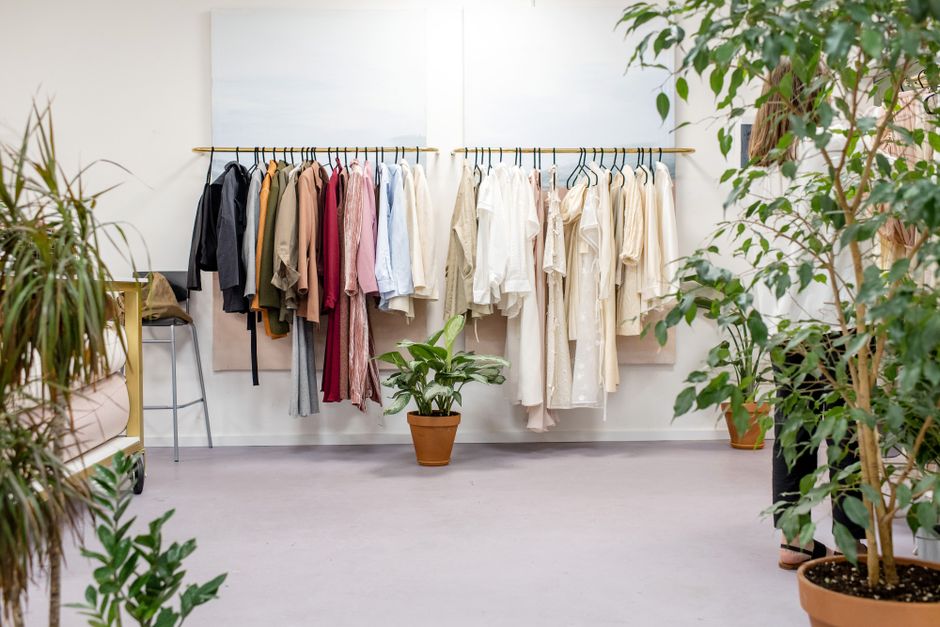
Plan for 2 to 3 clothing racks for every 10 participants, and about 10 hangers per person. Party.Pro calculates roughly 100 hangers for a 10-person party, so a host can estimate supplies before the event.
Provide at least two full-length mirrors and a private spot to try items on. Party.Pro recommends two mirrors as a minimum because guests need to see how clothes fit before they commit.
Add a coat stand or shelves so pieces can be seen at a glance instead of piled in bags. SustainYourStyle suggests this setup because visible clothes get browsed more often than hidden ones.
Include a labeled table for accessories, shoes, and jewelry so small items do not get lost. A dedicated surface keeps the main racks clear and gives guests a place to set down items while they look.
How do fair selection rounds work at a clothing swap?
Fair selection rounds work by dividing guests into groups before shopping begins. According to A Beautiful Mess, the host draws numbered slips of paper from a bowl or hat to assign each guest to a group.
Give each group 8 to 10 minutes to choose one item, with 8 minutes described as the sweet spot. A Beautiful Mess says 8 minutes is perfect because it keeps the pace moving without making anyone feel rushed.
Run three timed rounds, then open a final free-for-all round for everything left. A Beautiful Mess describes this structure as a way to give everyone a fair chance before the relaxed ending.
Set a one-item-per-round limit so early rounds stay fair and no one clears a rack before others shop. A Beautiful Mess notes that guests typically bring about 8 to 10 or more items and leave with only 3 to 4 on average, so there is plenty to go around.
Plan a simple way to settle ties when two guests want the same piece. A quick draw or alternating priority in the next round keeps the mood light and avoids arguments over a single item.
How do you handle sizing and trying things on at a swap?
Handle sizing and trying things on by sorting clothes by category first, such as tops, bottoms, dresses, and outerwear, rather than by size. This setup lets guests scan everything that might fit them without being limited to a labeled size section.
Keep at least two full-length mirrors near the try-on area and add a curtain or closed room for privacy. According to Party.Pro, two mirrors are a minimum for a swap, and a private spot makes guests more comfortable testing pieces.
Post a simple size chart or tape measure at the try-on spot for guests comparing labels across brands. Sizes vary between brands, so a measuring tool helps guests make faster decisions.
Invite guests to bring their own reusable bag for items they plan to take home. SustainYourStyle suggests this because it reduces waste and gives each person a clear way to carry their finds.
Remind guests that altered or oversized pieces are fair game. This approach supports inclusive sizing without pressuring anyone to stick to a single number on a label.
What do you do with clothes left over after a swap?
Handle clothes left over after a swap by asking each owner before the event whether unclaimed items can be donated. According to A Beautiful Mess, labeling bags by owner makes consent clear and prevents confusion at the end.
Pack up approved leftovers and donate them to Goodwill or another charitable thrift store. A Beautiful Mess lists Goodwill as a common destination for swap leftovers.
Return anything an owner wants back at the end of the event rather than deciding for them. The host should never assume an unclaimed item is unwanted.
Keep a simple sign-out sheet so guests can claim their own bags and donations stay trackable. A sheet with each guest's name and a check box for donate or return takes a few minutes to make and saves time during cleanup.
How do you plan a clothing swap for a large group?
Plan a clothing swap for a large group by expecting real volume. According to Party.Pro, a 15-person party at 10 items each puts up to 150 items in circulation, so the host needs enough space and supplies.
Scale supplies to the crowd, using the 2 to 3 racks per 10 participants ratio and about 10 hangers per person. Party.Pro recommends this ratio so racks do not become overloaded and clothes stay visible.
Use name tags and numbered group assignments so timed rounds stay organized with a big guest list. A Beautiful Mess describes numbered slips drawn from a bowl as a simple way to divide a crowd.
One host ran a swap for 35 guests in Austin, Texas, according to Party.Pro, which shows large events are workable with enough racks and mirrors. Recruit one or two friends to help with setup, check-in, and the leftover sort so the host is not handling everything alone.
Key Takeaways
- A clothing swap works best when the host states a specific item range, such as 5 to 10 items in good condition, in the invitation.
- Guests should clean items and run them through the dryer before the event.
- Timed selection rounds use numbered slips, 8 to 10 minutes per group, three rounds, then a free-for-all.
- Plan 2 to 3 clothing racks for every 10 participants and at least two full-length mirrors.
- Start planning at least two to three weeks before the swap.
- Get each owner's consent before donating unclaimed clothes to a thrift store like Goodwill.
- Keep the event free and do not require guests to bring a fixed number of items.
References
- How to Host a Clothing Swap — A Beautiful Mess, 2025-07-03
- How to Host a Clothing Swap Party — Party.Pro, 2026-08
- How to organize a clothes swap — SustainYourStyle, 2020-06-25